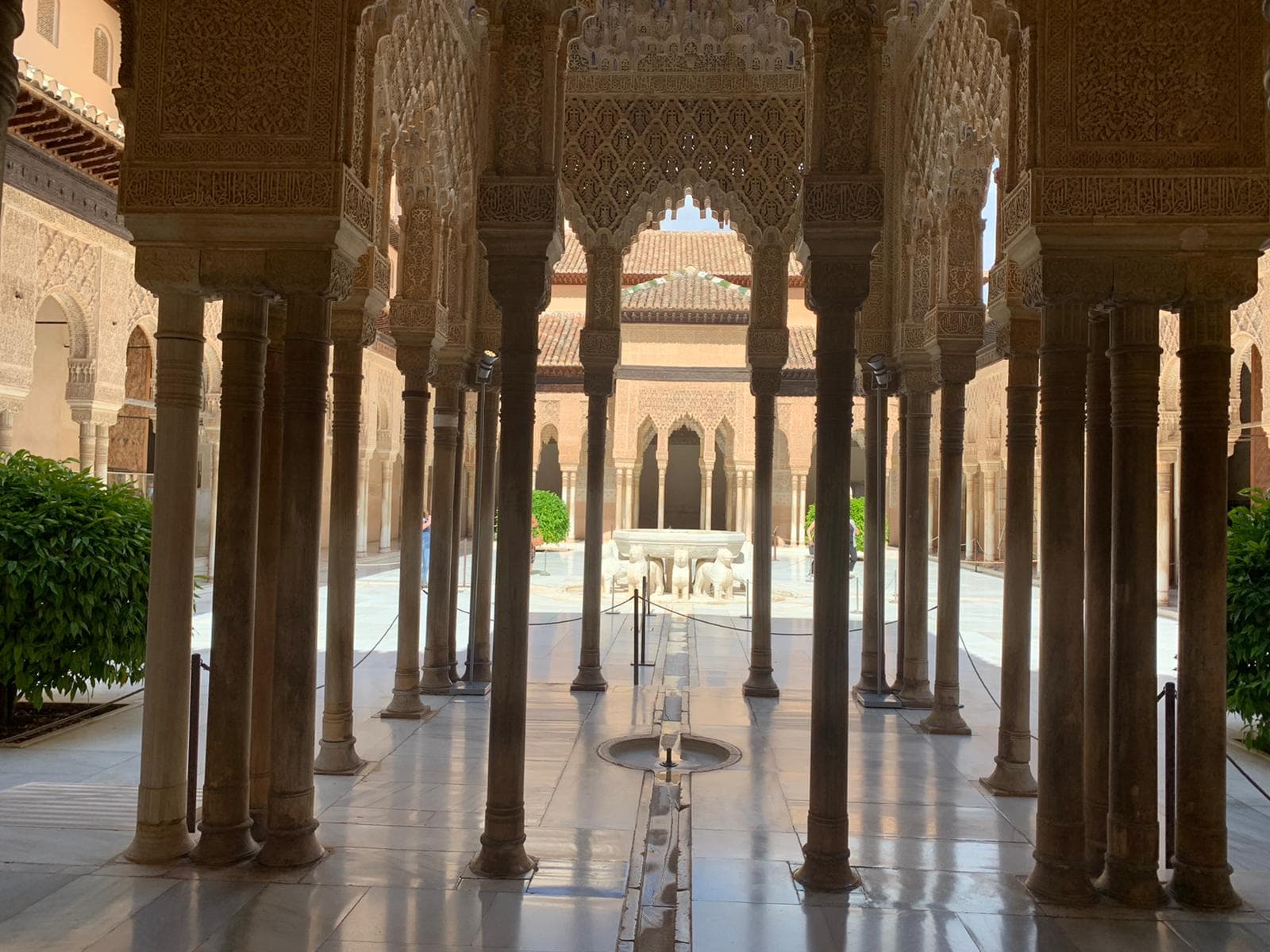
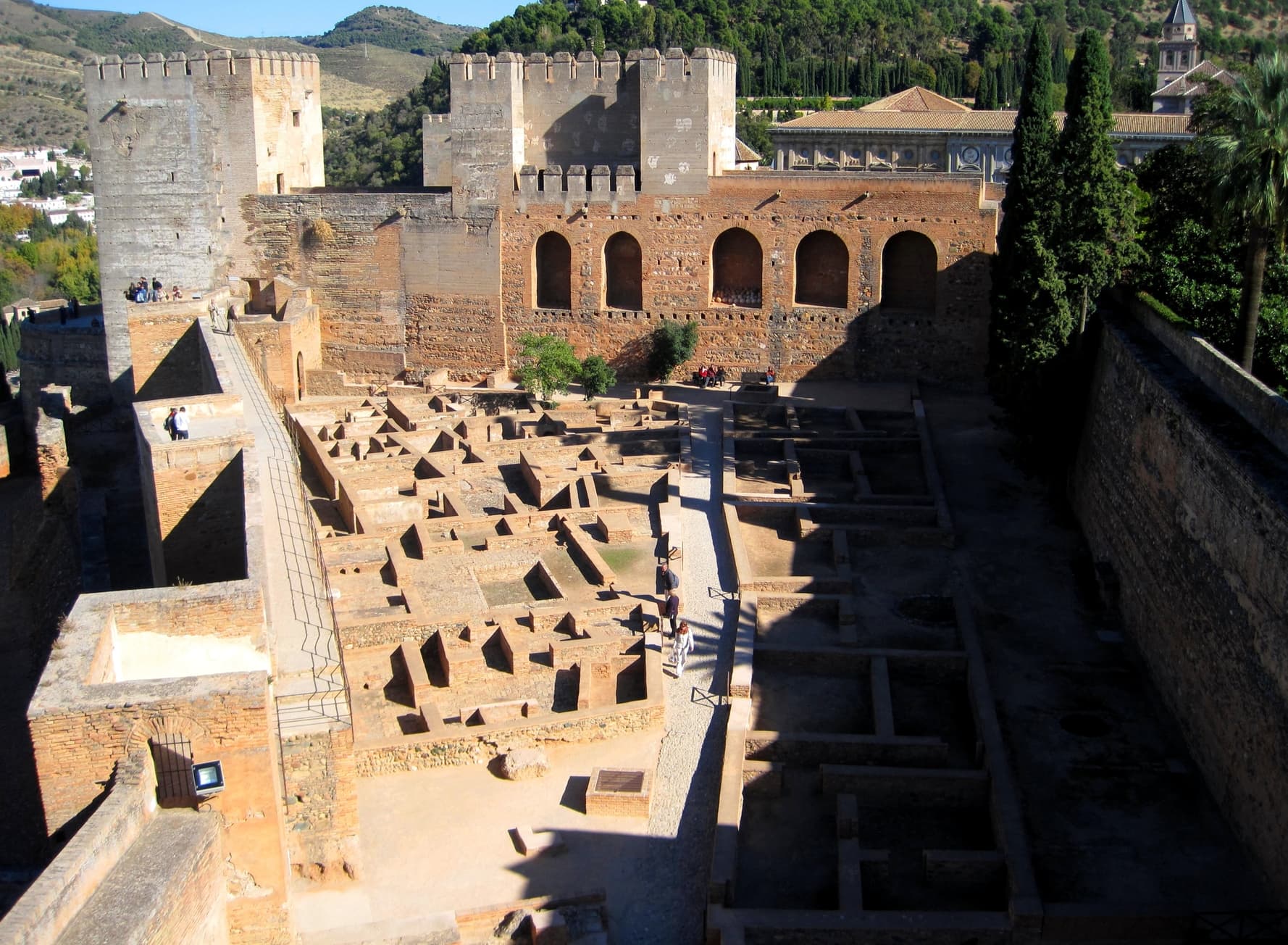
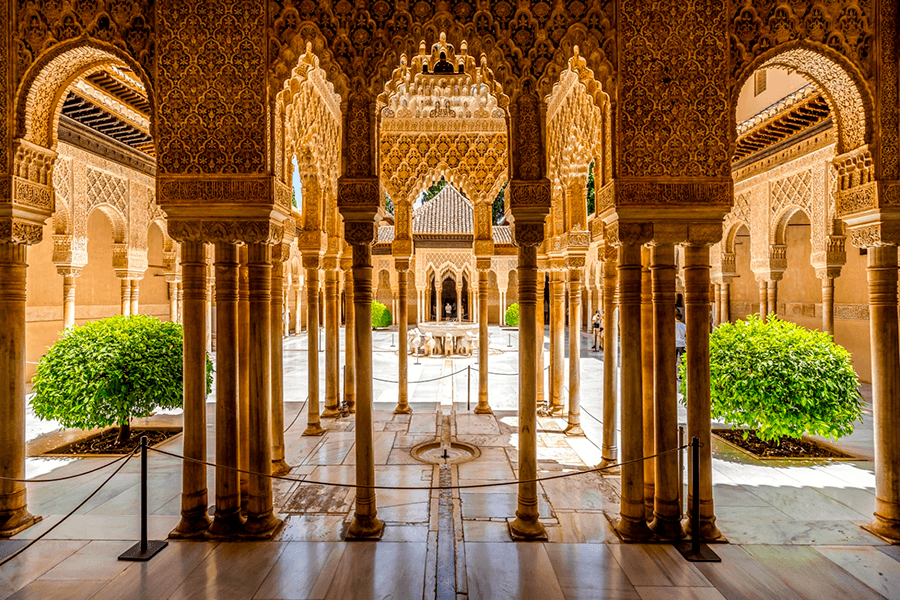
The Alhambra of Granada brings together several areas with different functions within the same site. The Alcazaba is the military, defensive part. The Nasrid Palaces make up the best-preserved palatial area. The Generalife is linked to the estate, gardens and the sultans' summer residence. The Palace of Charles V adds the Renaissance period within the complex.
Below you can see how the Alhambra's monumental complex is organised and what you'll find in each of its main areas.
How the Alhambra's monumental complex is organised
On one side is the palatial area, home to the Nasrid Palaces. On the other, the defensive Alcazaba. Add to that the Generalife and its gardens, the Palace of Charles V, and the area of the old medina or Secano.
This layout directly shapes the visit. Not all tickets include the same areas, and access to the Nasrid Palaces usually sets the order of the tour. With this layout in mind, you can better choose what to see first, which part needs more time, and which spaces are left out depending on the option chosen.
The Nasrid Palaces hold the best-preserved part of the entire monument. This area brings together three palaces dated between the 14th and 15th centuries, where you can appreciate the palatial side of the Alhambra through the plasterwork, interior architecture, tilework and decoration that the guide describes as unique within the complex.
It is also the largest part of the tour and the area where you enter the sultans' former residence. Here you can better follow the decorative, structural and intellectual dimension of the complex, with poems on the walls, work on materials and colour, and a more direct sense of palace life within the Alhambra.
02
The Partal
The Partal is part of the Alhambra's palatial area and is known for its relationship with water, vegetation and views within the complex. It is one of the areas that helps you understand how architecture, garden and landscape come together in the Nasrid part of the site.
Within the tour, it acts as a transition stretch between the main areas and completes the picture of the complex beyond its best-known spaces. Its value in the visit lies in how it connects the palatial area with the monument's open surroundings and in the image it projects onto the landscape.
Defensive area
03
Alcazaba
The Alcazaba is the oldest, military part of the Alhambra. This is where the site's defensive role was concentrated, along with the garrison quarter, home to the elite army in charge of watching over and protecting the complex.
In this area, the visit focuses on a more strategic reading of the monument. The Alcazaba shows how the surrounding land was controlled from the fortress and how military life was organised within the palace-city, in contrast to the residential, palatial part of the rest of the site.
04
Gates and towers of the Alhambra
The gates and towers are part of the complex's defensive story and help you understand how access to the palace-city was controlled. This part relates mainly to the Alcazaba, where the old watchtowers are preserved and where you can see remains of the wall that protected the city.
In this area, the visit shows how the site's defences were organised, what materials were used to build tall walls and towers, and what role the army played within the Alhambra. It's a useful part for rounding out your understanding of the monument beyond the palatial and garden areas.
Gardens and estate
05
Generalife
The Generalife is the sultans' estate and summer palace within the monumental complex. It is linked to nature, relaxation and the old Nasrid-era orchards, a part of the site that changes considerably with the seasons due to the vegetation and Granada's climate.
In this area, you'll learn about the creation of the palace, how the orchards were organised, and the changes the space has gone through over time. It also covers the period after its conversion to Christian use and the restorations carried out in the 19th and 20th centuries, which help explain the Generalife's current appearance during the visit.
Renaissance period
06
Palace of Charles V
The Palace of Charles V is the great 16th-century transformation within the Alhambra. It was built by order of Charles V as his official residence and stands out for architecture already removed from the Nasrid period, linked instead to the Renaissance.
Within the tour, this area gives a clear view of a different phase of the monumental complex. Today it houses museums and exhibitions, and serves as a way to understand how the Alhambra also incorporates the later Christian period within the same site.
The palace-city
07
The medina or Secano
The medina, also known as the Secano, is the part of the Alhambra where ordinary people lived within the site. This is where the palace-city's everyday life was concentrated, with an estimated population of 4,000 people at its peak.
This area helps you understand that the Alhambra was not organised solely as a palace or fortress. It also included spaces for living, movement and daily activity within the complex. In this part of the tour, archaeological remains of that old town are preserved, rounding out your understanding of the site beyond its palatial and military areas.
What to see at the Alhambra if it's your first time
If you can't dedicate a full visit to the complex, the priority is usually the Nasrid Palaces. This is the most sought-after area and holds the best-preserved palatial section of the Alhambra, which is why it usually shapes the visit for first-time visitors who want to focus on the most recognisable part of the monument.
Your second choice depends more on the type of visit you're interested in. If you prefer a more monumental, defensive visit, the Alcazaba gives you the military side of the site and a clearer sense of its strategic role. If you're more interested in the outdoors, the landscape and the gardens, the Generalife offers that other reading of the Alhambra tied to the estate and the summer residence.
If your time is limited, here's a useful way to prioritise:
1Nasrid Palaces as the main part.
2Alcazaba if you want to focus on the fortress.
3Generalife if you prefer gardens and the outdoors.
4Palace of Charles V as an additional stop to round out the visit with the complex's Renaissance period.
Plan your visit to the Alhambra of Granada
Here you can see the main options and choose the one that best fits the time you have and the way you want to experience Granada.
This is the most complete way to explore the Alhambra of Granada in a single booking, with access to the Nasrid Palaces, Generalife, Alcazaba and Palace of Charles V. An option designed for those who want to see the main part of the monument with the route already organised, taking in the palatial area, the fortress and the gardens of the complex all at once.
A guided tour designed for those who want to explore the outdoor, monumental part of the Alhambra without entering the Nasrid Palaces. The route focuses on the Generalife, Alcazaba and Palace of Charles V, three areas that let you understand the military, residential and Renaissance sides of the complex in a single tour.
Combines the guided tour of the Alhambra with a walk through the Albaicín and Sacromonte in a single booking. An option designed for those who want to see Granada's great monumental complex and then complete the visit with its best-known historic neighbourhoods on the same day, moving from the Nasrid Palaces, Generalife and Alcazaba to two key areas for understanding the city beyond the monument's walls.
A guided tour of the Alhambra with the Granada City Pass, an option designed for those who want to extend their experience beyond the monument. Alongside the Alhambra visit, the City Pass includes access to sites such as the Cathedral, the Royal Chapel, the Charterhouse, San Jerónimo, several museums, and urban transport with 9 bus rides and 1 round trip on the tourist train.
5 h
From
120€
The guided tour of the Alhambra can also be booked as a private tour, and the Alhambra plus Albaicín and Sacromonte tour is available as a small group and as a private tour: choose the option in the selector on each tour's page.